Showing posts with label deer. Show all posts

Wednesday, May 18, 2016

Thank Zeus for Experts

You can always tell as city kid, but you can't tell him much.

The pundits ask why those of us in fly-over land recoil at the solutions offered by coastal elites.  The thing is sometimes we hear those coastal elites talk about something we actually know something about, and they reveal themselves to be idiots.  If they don't know how to handle a growing deer population, what else do they not know about?

Experts Call City's Deer Vasectomy Plan "Really Stupid"

Last week, the de Blasio administration unveiled their plans to manage Staten Island's exploding deer population by giving every single male deer a vasectomy. However, some experts are questioning their solution—a Cornell University ecologist told the Staten Island Advance, "It's difficult for me to come up with all the reasons why this is a really stupid plan. It's ridiculous from the onset."  
The city hopes to perform vasectomies over the next three years in order to bring down the deer population by 10-30%. But biologists say this really won't do anything.
Read the whole thing here.

Thursday, May 5, 2016

Finally A Serious Proposal

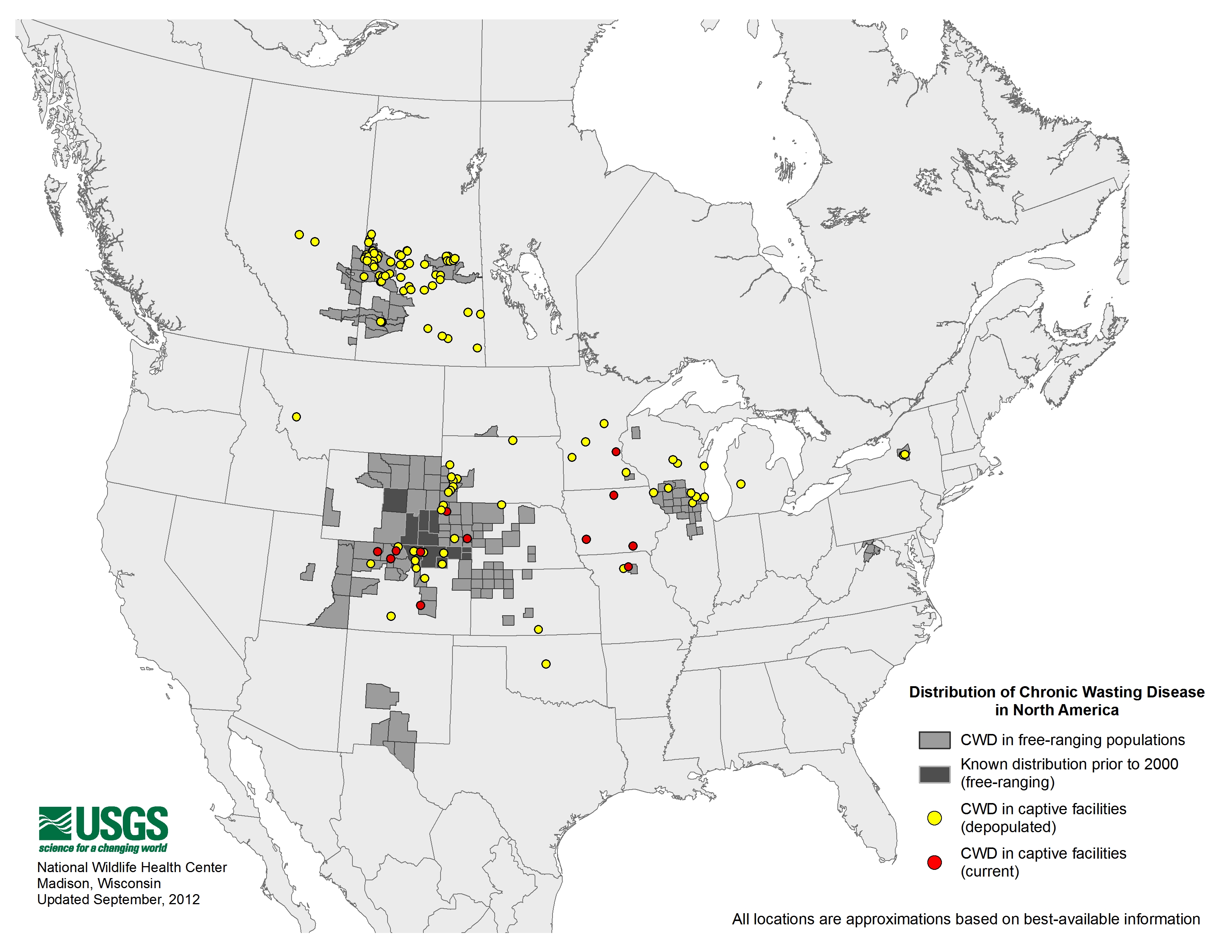
The Wisconsin Wildlife Federation has proposed a plan to start to address the spread of Chronic Wasting Disease in Wisconsin.

I have written about the spread of CWD in the past.

The best time to have enact these measures would have been ten years ago.  The second best time to is today.

The the Star Tribune:

MADISON, Wis. — A prominent sportsmen's group wants Gov. Scott Walker to crack down on deer farms as he revises the state's chronic wasting disease tactics. 
The Wisconsin Wildlife Federation sent the governor a letter Thursday asking him to require the farms to double-fence, install warning devices to detect open gates and kill their herds within a month if CWD is detected on their farm and it's not double-fenced. 
The federation recommended more testing of wild deer for CWD and suggests returning to in-person carcass registration in disease zones. The group also demanded more transparency from the state on the disease's spread. 
A Walker spokesman didn't immediately respond to an email. Whitetails of Wisconsin Association President Rick Vojtik saying the captive herd isn't spreading the disease and double-fencing won't stop its spread.
Way out of date

Friday, December 4, 2015

Riverwalk

Wisconsin's public lands are never more crowded than during the nine day whitetail gun season.

They're rarely so barren as the week following that gun gun season.

I try to take the dogs out for a walk in that week as we look for unrecovered deer.  It became obvious that the area was much more heavily hunted this year than years past, but it was still fun to get out and continue to work on Stoic's field manners.

Only ten minutes out of the car and Stoic yelps and runs back past me as if he'd been nipped by a coyote.  A short investigation led to the only carcass we would find.  After a few seconds of checking it out, Stoic was ready to rag on it.  Once he was exposed for a few moments he started to get the idea that maybe raccoon isn't so scary afterwards.


Three brand new deerstands, shooting lanes, boxes to hold gamecams and scent lures.  There was a lot more human sign on this bit of public access than previous years.


Stoic checks out a den near the river.  Sparta and he left it on command, but I thought I was going to have to pull them out.


I do love me some upper midwest oak savanna.


We found to gut piles, relatively untouched by carrion eaters.  I took that as a good sign that they'd been eating meat and fat off of a unrecovered deer somewhere.  Maybe they were, but we didn't find it.  I let both dogs take a nibble before moving them on.  I don't care to clean vomit out of my car.


It feels as if there are more spaces along the river where willow saplings are growing larger and denser than years past.  If true, this has to be a good thing.  The river's cutting edge, seen in the background, is replaced by the growing edge.  Trees speed up the process of growing.  The Red Cedar moves so fast I might just live long enough to see an oak sapling growing on this GPS coordinate before my spark goes dark.


I have a whistle I use which all the dogs learn means "check in with me."  It isn't a hard "come" it is a "put your eyes on me."  I use it if I've gone a little too long seeing or hearing one of the dogs or when I am making a sudden change in direction or turning around.

Stoic ventured out a time or two but stayed close most of the time. It was the perfect set of events for him to learn the meaning of that "find me" whistle.


A tree falls in the river, the current slows behind it, an island is born, grass can grow.


Every time we're out here, I cross down tree to a large grassy island that I'm sure ought to hold something interesting to see.

Every time the dogs believe me to be nuts.


This beaver lodge has been occupied for at least the last four years.  Usually I can get them to come out, look me over, as slap their tail on the water in disgust at my rudeness of standing atop their lodge.  This year I heard them leave the go underwater from inside the lodge but no protest was forth coming.  Stoic was really, really, interested in the smell of what lived in there.  Yes, they're rodents but we're gonna learn to leave them alone.


Friday, November 20, 2015

Is it Better to be Lucky or Good?

I love calls on Thursdays.
I'd slept through my first night after working the night shift the previous nine.  I had things I wanted to do but as my body adjusts to the new schedule all I feel like doing is eating the kids' Halloween candy, drinking beer, and napping.

I was about to give in to an noontime nap when the phone rang: gut shot, twenty hours before, large intestine, 75 minutes away.

Perfect!  Suddenly I had a reason to stay out of bed.

The hunter and his party had started to track the deer the night before.  They lost the blood trail and, as it would turn out, that was to their good fortune.

I arrived and the hunter, an employee of his, and a nephew headed out to the stand.  While the hunter had a good idea of where the deer was when he shot it, the blood trail had been obscured by a dusting of morning snow.  Starting at the hit site, I tried to keep Sparta going slow but there was almost no way to confirm she was on the correct track.  Using GPS the hunter was able to tell me we were close but that is all.

The spot of last blood had been marked by a piece of toilet paper.  Did I mention that there had been a dusting of snow?

Still Sparta took to a line and I let her follow it, farther than I would have normally.  At some point I realized the hunting party had veered off in another direction.  It was at this point that I realized that in my excitement to get started, I'd left my phone in the car.

Sometimes you make your own bad luck.  I wasn't worried but I knew at some point I needed to stop Sparta and reconnect with the search party.  I'd have gone farther if I could text the hunter to let him know what I was doing.  It would turn out that it was good luck that I could not contact him.

"If we hadn't started searching for you, we might not have found the deer."


As I was deciding how far to let Sparta lead me on this trail before taking her back and restarting her, the hunting party was feeling the need to reconnect with me.  They'd been searching an area they thought the buck had traveled but left it to head in my direction.

About half-way between where Sparta had taken me and where they had begun their search there was a shout of 'Deer!"  The hunter's hired man found the missing buck.  It had travel ~100 yards from last blood but in a different direction than the party expected.

When he field dressed the deer, it was still warm.  It had been dead just a couple of hours.  In other words, if they'd had a better blood trail the night before they would have bumped him and that trail, potentially, could have grown much, much longer.

After getting the buck back to the truck, a story in itself in those Taylor County low areas, I congratulated the hunter on finding his deer and added something about how maybe they wouldn't have needed the dog after all.  The hunter smiled, "You never know.  We might not have found it if I hadn't decided we needed to find and check on you."

There is a saying that goes, "it is better to be lucky than good."  I guess so far as results are concerned, that much is true.  Still, for my mental health I find focusing on being good, or at least being my best, and ignoring luck the better path.  Doesn't mean I won't embrace Lady Fortune when she smiles on me.

It was an afternoon well spent.  We met some nice people, saw some nice country, and got to be part of a deer recovery and, when the rubber hits the road, that makes for a good day.  I don't forget, however, that Lady Fortune can take away just as capriciously as she gives.

Tadeusz Kuntze: Fortune, oil on canvas:National Museum, Warsaw


Wednesday, November 18, 2015

Grid

Talking to hunters I have discovered that terms like high back, brisket, or back of the shoulder can mean different things to different people.

Our eyes can fool us, especially in low light.  We can think our arrow hit the deer in one place at a certain angle when, if fact, the recovered deer shows wounds in quite another.  Reality is hard enough, there is no need to compound the problem through unclear communication.

I'm not sure who we owe for these nice illustrations, I got them from Mark, a tracker who lives near me.  He received it from someone else who likely had it passed on to him from yet another tracker.

I am still not sure how to incorporate these images into my pre-track interview.  When texting with a hunter, it is easy enough to send the images and ask them to comment on where they believe they hit the deer.  Over the phone, it is a bit more complicated.  I suppose I will just print them and keep them with my tracking journal.  Then I can ask the hunter whenever we meet in person.

Quarting Away


Quarting toward


True Broadside

Thursday, November 12, 2015

Bonus

I went to my local processor to pick up a steer we took in a while back and came home with a box of training aids to boot.

Each leg can be chopped into 4 or 5 dog bones.  At the end of each longer training track one a tracking dog will find a piece of deer.  Twenty legs from five deer and I have enough for 80 to 100 training tracks.  More than enough to Sparta to much more complicated scenarios in the off season and to get Stoic started and see if he can channel his natural nosing ability and prey drive in the direction of blood tracking.

In related news, the dogs now have two shelves of dedicated space in the upright freezer.
Enough for training and the occasional treat.


Monday, October 26, 2015

Sparta gets a Win

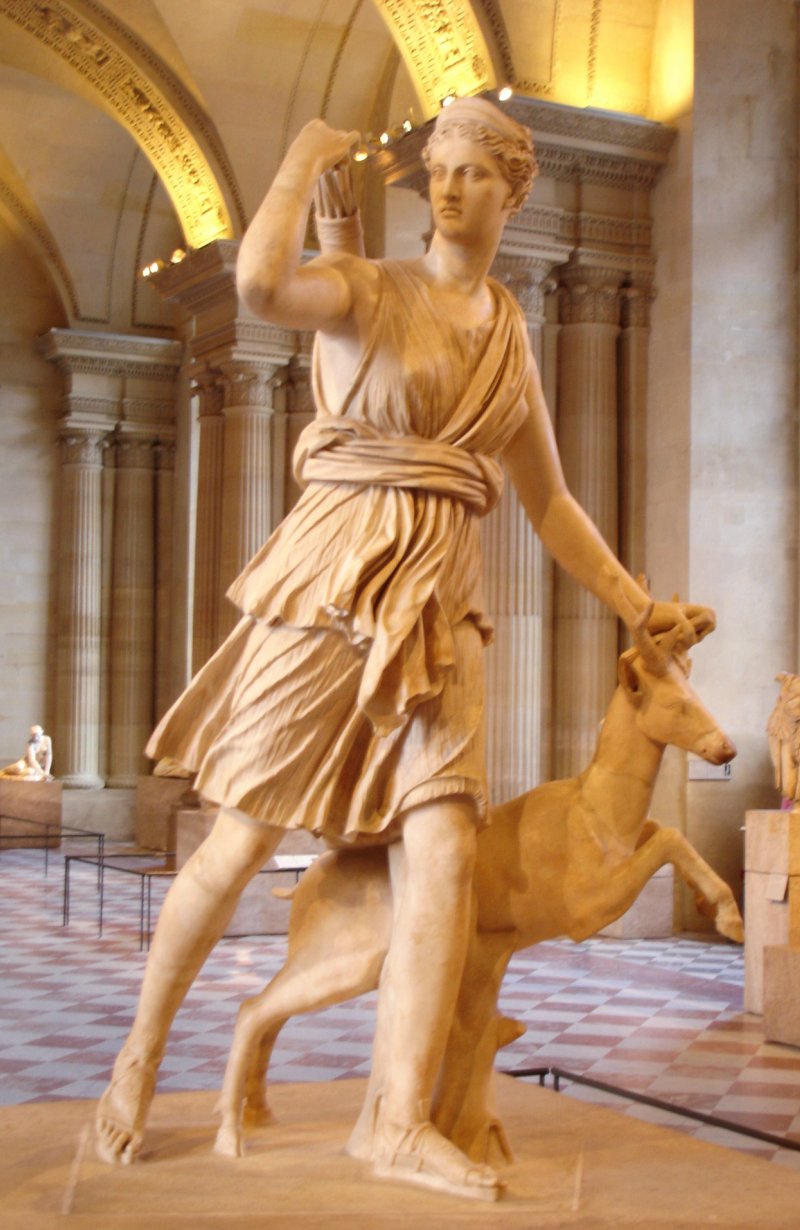
Artemis: Sometimes a homo sapien just needs to whisper a prayer somewhere.
What does it take to get two men in their forties, who've met just an hour before, to embrace in full scale man-hug?  A hunter finding a deer that he had feared was lost.  A tracker gets to see his dog work.

We are homo sapien.  200,000 years of evolution made us this way.  We are hunters.

But I am getting ahead of myself.

-------------
Saturday night a neighbor, the father of my oldest son's friend, gave me the number of a gentleman in need of a tracking dog.  A few text messages later and I had arranged to meet the hunter the next morning.  A shot to the lower chest: lots of blood that ended in a clover field, fat found along the trail.

Arriving Sunday morning, I got pretty excited.  I had Sparta start the trail near the beginning because even though the trail started heavy, we were going through some tall grass and a small wetland area.  I prejudged the situation thinking it was a strong possibility that the buck had back tracked from the hunter's point of loss.

I wanted to check and mark any place Sparta wanted to go off the obvious trail to look for smaller bits of sign.

It was a clear trail and Sparta followed it well for close to a mile.  I marked a couple of spots to investigate later but as we exited the cover into a harvested/plowed corn field, I began to doubt by thesis.  The deer continued to bleed as heavily as before.  Unless he stepped in his own footsteps on the way back, it would be difficult to see how he could backtrack without leaving evidence.

About forty yards into the clover field, the blood quickly reduced to nothing.

Sparta led me another 100 yards parallel to the corn field toward some wooded cover, but I never found another bit of evidence to point to.  The hunter had to leave for a confirmation and party.  I spent another hour or two circling the clover field looking for sign.

I began to doubt myself.  If there is any problem with a dog, it is with the owner/trainer.  I was entertaining the idea of pulling her from active service to put more time into training.  The situation did not make sense to me at the moment.

Synthesis: the deer stopped running and had lost a fair amount of blood.  Both worked together to lower its blood pressure.  I am told that a brisket wound can bleed profusely, like when a person gets a cut to the head, but unless the arrow gets to the heart/lungs/artery are often non-fatal.

-------------
Another call came in.  The hunter said he honestly could not make out the point of impact.  He described a mile long trail through swamp and field.  I confess I like him, even over the phone.  So I explained it sounded like a bit of a long-shot but I was willing to give it a try and we made arrangements to meet.

The hunter and his tracking party were Amish.  I was impressed at the meager blood trail they had been following.  

They were, hands down, the most patient, most efficient, and most accurate sight trackers I have ever met.  I tip my hat to them and the effort they put forth.

I was able to take them another two hundred yards: though each time is was they who pointed out the visible blood.  The deer went into a tall grassy area and I could only guess about which way he went out.  The area had been so think with deer since the night before that I could almost smell them.

I huddled up the team.  They knew the score.  They practically completed my sentences at every turn.

Daniel: Was the blood that color the entire length of the track?
Hunter: Yes it was.  Yes it was.  I must have hit it in muscle.
D: Did you ever found a wound bed?
H: No, he was able to keep going the entire time.
"Work 'em hard; treat 'em like heroes."
D: It has been a pretty straight track, hasn't it?
H: It has.  We're only, I'd say, 100 yards off of due east from where I shot it.  He is going back to his core area.  He is probably going to live.
D: I think you're right.  You did show me that area where he ran around in circles as if chasing his tail and you haven't found the arrow.  If I had to guess I'd say a shoulder or high neck shot.

I really liked those guys.  Humility kept the hunter from talking about it but I am thinking that must have been some buck to get them to work that hard and then call me in.

Synthesis: I should have done more to dissuade the gentlemen from having me come out.  They had buck fever, I had enough information that, had I thought rationally about it, would have assumed that the deer had been muscle shot and would survive.  Still, I am the better for having met them.

------------
While I'd been out, two more calls had come in.  They arrived at about the same time.  With three hours of daylight left to us, I called the one closest to my current location.


Artemis, I whispered, let it be a gut shot.  We could really use a good, smelly, gut shot.


Gut shot.

I'd never run Sparta on three tracks in one day.  It had been eight hours since we left home, but Sparta needed a win.  Let me be honest, I was projecting.  I needed a win.

We arrive, introduced Sparta to the hunter and his girlfriend (I learned that with the Amish group, Sparta gets distracted if she smells/sees someone she hasn't met) and got to work.  Sparta ran a track about 30 yards out to the hunter's last blood and then forward.

Even as we moved forward I noticed, the hunter and his girlfriend were being more careful at trying to stay out of the scent line than even I would be: props.

My emotions were a mixture of hope and doubt.  We were surrounded by wooded housing development.  You could only see one set of neighbors but the sounds were everywhere: four-wheelers, joggers, kids enjoying the last evening of a weekend, it was distracting to me.  Sparta must have been overwhelmed.  Then she was spooked by a neighbor's 3-D deer target.  This environment was way outside our training rubric and it showed.

Then, for the first time that day I got to yell it, "Blood!" ~80 yards past the hunter's loss of track, with the hunter and his girlfriend still 40 yards behind me.  A small pool of blood, but a lot more than we'd seen so far.  Sparta led me on, more blood, more blood, and then nothing.

I restarted her again.  I knew she was growing irritated.  She hates being re-started.  She was tired of this game.  She began to grab at the tracking leash, growling and tugging.  I pulled her aside for some play.  I put her on her walking leash.  Five minutes and nothing was working.  I was afraid she was going to go "the union rules state" on me with half of the most probable track we'd had all day only half-finished.

Out of desperation I pulled out the best idea I had left.  I picked her up and cradled her on her back like a baby.  I scratched.  I baby-talked.  I nuzzled.  I did everything I could to communicate love, trust, and authority without a care in the world what any observer might think.

She started to lick my face.  I put her down and we got back to work.

Giving me strong indication that she was on the trail we went forward and then it happened: blood, blood, blood: a  blood trail as obvious as the one earlier in the morning into pine saplings about eight foot tall.  The hunter and I were agreed that he should get his bow, noc an arrow, and track forward alone for a short-time.

The deer ought to be dead, but it is possible the buck hadn't read that book.


He got to a point where the cover was too thick to shoot so he motioned us forward.  With Sparta in the lead, we crept forward.  "Deer!" I shouted.  Hugs ensued.  Pictures were taken.  Sparta got some bit of liver, heart, and a bony piece of leg for the drive home.

The hunter got his deer.

I got to put away some of that nagging doubt.  Sparta and I are bringing value to hunters.  We can continue to train and hone our craft in the knowledge that while we might not yet be the A-team, we are a team, and this is what we do.

Synthesis: I do love me a good smelly gut shot and a hunter with enough foresight to back out and let us do our thing.  The deer was angling away.  He nicked the liver and one lung.  Deer bled to death internally, from the combination of internal wounds.

Happy Hunter, Happy Dog, Happy Tracker


Saturday, October 10, 2015

Youth Hunt

I am a bit of an agnostic about the social value of the youth mentored hunt, but if my kid wants to participate, I have no objection I am game for taking him out.

We didn't see a thing this morning but this evening three does were seen.  If they'd been broadside, I'd have let the man-cub shoot but they were walking straight away from us.  It was a hard call to make.  I could've made the shot easily but him, well, it would be too much "trying to hit this deer" and too little "going to kill this deer."

They were headed to a nearby alfalfa field where they are seen almost nightly.  There is another day left in this youth hunt weekend.

The plan is to let him sleep in tomorrow while I run to a neighbor's and help them split some of their perennials.  In the afternoon we'll take the same circuitous route we did today, but plant ourselves closer to their trail.  Hopefully by this time tomorrow we will have both experienced a little bit more of what it means to be homo sapiens: him now a big game hunter and me as one who trained a boy up in the way he should go. 

He sits well for eleven.

Monday, October 5, 2015

CWD: Monitoring is just the Start

Chronic Wasting Disease  (CWD) should motivate you.
Until we know more prions-related diseases, they should always motivate you.

There is no sterilizing them.  You can not cook them away.  They can lie infectious and in the soil for an unknown amount of time.  They primarily spread through the consumption of animal products but they can be ingested through water tainted by animal waste.

It can take decades before an infection makes itself known. It can only be positively diagnosed through an autopsy.  

Books could be written about what we do not know about prion diseases.  
We don't know exactly how CWD is transmitted between deer.
We don't know the impact it will have on local herds over time.
We do not know how many deer might be infected and infectious yet remain asymptomatic.
We don't know how easily or even if it is transmissible to humans.
If it were transmissible, we have no idea how long it would lie latent before showing itself.


We do know:
  • CWD was first identified in captive populations of mule deer and then other Cervidae species (1961).
  • Fourteen years passed until it was identified in a wild Cervidae (an elk).
  • The disease is spreading to other herds, usually aided by human intervention, usually due to the farming of one species of captive Cervidae or another. 

We do know that if it is transmissible to humans it will be treated as a variant of Creutzfeldt-Jakob Disease (CJD) and that CJD it is a pretty fucking terrible way to die.


The point is, we don't know enough to even have an idea how to respond.  We won't know until we spend some money.  We won't know until we collect some data.  We won't know until we make it easy to collect a statistically significant sample of deer brains from across the state. 

If we are going to confront the problem, we need to know how prevalent the infection is in our deer population.  One identified CWD hotspot is piloting a program consisting of 24/7 refrigerated drop-off points for deer heads, that can then be tested for latent CWD infection.

I applaud this program.  I would like to see it expanded.  I'll pay an extra dollar for my deer tags or shotgun shells.  Better yet, if we can't close them down, maybe we should tax fenced deer hunts and deer farms to help pay for a problem they are at the very least contributing to.

I'm paying attention because CWD is now in my backyard and I don't really have an idea of how to respond.  I am motivated because I know enough about prions to be motivated.  I know I'm willing to give something up to avoid gambling exposing my kids to the disease.

Of course the easiest thing to give up would be the farming of wild Cervides.  I guess the libertarian in me should be glad that the burden of proof seems to be with the government before shutting down private enterprise.  Given the spread of the disease, however, it is starting to look self-evident to me that the commonweal is being harmed by the practice.

Despite evidence to the contrary of course deer farms will claim they're being discriminated against.  I think they're just a bunch of whining little piss ants who know they need to be shut down for the public good but lack the courage to do it themselves.

We all make mistakes guys.  Own it.  Fix it. Make it right.
Already out of date

Imagine if we discover in a decade's time that the disease is just barely transmissible to human beings.

Even if the risk remains statistically insignificant, even if your at more risk of falling out of a tree stand to your death, imagine the response the morning after 60 Minutes does an exspose on the risk of getting CJD from venison.

Imagine the response if, like those at risk of having been exposed to Mad Cow (the bovine form of prion disease), the Red Cross asks those who've eaten venison to refrain from donating blood.

The impact on our sport would be horrendous.
The impact on the deer hunting economy would be catastrophic.
The result might even overflow to other hunting sports.  The mob has no sense of proportion.

I am not calling for fear; I am calling for prudence.  I am calling for deer hunters to lead the charge to protect the deer herd, the health of which they depend upon.

We should be motivated by the spread of CWD to protect the deer herd which is just another way of protecting deer hunting.

As it stands, I am rethinking how I am going to butcher/use my deer meat.  At the least, I will stop making any incisions that cross the spinal column.  Despite being told how tasty it is, I've never eaten deer brain.  I won't start.

If circumstances change, however, I might become even more conservative.  If I break the back of the deer, exposing much of the remainder of the meat to the spinal column, should I eat it or should I turn that tasty carcass into dog food?   

I love my venison, but risking my brain and the brains of my children is not a gamble I am willing to take, at least until some of today's "not known's" are turned into "now we know."


YearEvent
1967CWD was first identified as a clinical disease in captive mule deer at the Colorado Division of Wildlife Foothills Wildlife Research Facility in Fort Collins, Colorado.
1978CWD was officially classified as a Transmissible Spongiform Encephalopathy (TSE). TSE's include scrapie in sheep and goats, Mad Cow disease in cattle, and Creutzfeldt-Jakob disease in humans.
1979CWD was first recognized in captive mule deer and black-tailed deer at the Wyoming Fish and Game Department's Sybille wildlife research facility.

CWD was diagnosed in captive elk for the first time.
1981The Colorado Division of Wildlife identified CWD in a wild elk, marking the first documented case of CWD in a wild cervid.
1985The Colorado Division of Wildlife confirmed the presence of CWD in a wild mule deer for the first time.

The Colorado Division of Wildlife attempted to eliminate CWD from the Fort Collins Foothills Wildlife Research Facility by treating the soil with chlorine, removing the treated soil, and applying an additional chlorine treatment before letting the facility remain vacant for more than a year. The effort was unsuccessful.

The Wyoming Fish and Game Department identified CWD in a wild mule deer, marking the state's first case of CWD in a wild cervid.
1996CWD was found for the first time outside of the Colorado/Wyoming CWD "endemic zone" in a captive elk farm in Saskatchewan.
1997CWD is identified on several captive elk facilities in South Dakota, marking the first documented cases of CWD in the state.
1998June 1998 and again in June 1999, elk shipped to Oklahoma from an alternative livestock facility near Philipsburg were confirmed to have CWD.
1999The Nebraska Game and Parks Commission discovered CWD in a wild mule deer, the state's first documented case of the disease.

CWD is detected in a captive elk facility in Oklahoma, marking the first time the disease was found in the state.

In November and December 1999, all 83 elk at the Philipsburg facility in Montana (the source of the CWD captive positive in Oklahoma) were destroyed.
2000CWD was found in a Saskatchewan mule deer, marking the first time the disease was found in the province's wild cervids.
2001South Dakota discovered CWD in wild white-tailed deer for the first time.

Nebraska discovered CWD in a captive white-tailed deer facility for the first time
2002The Wisconsin Department of Natural Resources detected CWD in wild white-tailed deer, the state's first documented case of CWD.

The New Mexico Department of Game and Fish discovered CWD in a mule deer near White Sands Missile Range. This is the first case of CWD in the state of New Mexico.

The Minnesota Board of Animal Health confirmed the presence of CWDin a captive elk, the state's first documented case of the disease.

The 1st International CWD Symposium was held in Denver, Colorado.

The Wisconsin Department of Natural Resources detected CWD in a captive white-tailed deer, the state's first documented case of CWD in captive cervids.

Saskatchewan detected CWD in a mule deer outside of the province's previously delineated CWD containment area.

The Illinois Department of Natural Resources discovered CWD in a wild white-tailed deer, the state's first documented case of CWD.

The South Dakota Department of Game, Fish and Parks discovered CWD in wild elk from the Wind Cave National Park. This documented the first case of CWD found in the state's wild elk populations.

The first case of CWD in Alberta was found at a white-tailed deer farm near Edmonton.

Wyoming confirmed the first case of CWD in a mule deer west of the Continental Divide.
2003The Utah Division of Wildlife Resources detected CWD in a wild mule deer, marking the state's first case of CWD.

A dot blot ELISA test for CWD, developed by VMRD, Inc., was licensed for CWD testing.

United States Department of Agriculture licensed a CWD dot plot (ELISA) test developed by VMRD, Inc. The test analyzes retropharyngeal lymph node samples and has a turnaround time of approximately 24 hours.

U.S. Senator Wayne Allard (R-CO) introduced a comprehensive bi-partisan bill targeted at coordinating and increasing federal response to CWD management.

Rep. Ron Kind (D-WI) introduced two bills created to assist states in combating the spread of CWD; the National Chronic Wasting Disease Task Force Establishment Act and the Chronic Wasting Disease Research, Monitoring, and Education Enhancement Act.

The United States Department of Agriculture approved a second-generation CWD test developed by Bio-Rad Laboratories, Inc.

Congress approved a bill that includes $4.2 million to expand research on CWD in wild deer and elk populations.
2004Agriculture Secretary Ann M. Veneman and Health and Human Services Secretary Tommy Thompson announced creation of a federal interagency working group to identify gaps in scientific knowledge about abnormal prion proteins and promote coordination of prion research projects by federal agencies.

CWD was set as a national priority for piloting a Wildlife Disease Action Plan by the Canadian Councils of Resource Ministers.

The Wyoming Game and Fish Department discovered the presence of CWD for the first time on the east slope of the Snowy Range Mountains in the north-central part of the state.

The Nebraska Game and Parks Commission confirmed a case of CWDin a white-tailed deer near the town of Grand Island. This is approximately 250 miles east of the Panhandle where all previous cases of CWD had been documented.
2005The Colorado Division of Wildlife identified a case of CWD in a mule deer south of Colorado Springs. This is the farthest south on the Front Range that CWD has been detected.

The New York State Department of Agriculture and Markets confirmed the presence of CWD in a captive white-tailed deer, marking the state's first documented case of CWD.

The New York State Department of Environmental Conservationdiscovered CWD in a wild white-tailed deer from Oneida County. This documented the first case of CWD found in the state's wild deer populations.

The 2nd International CWD Symposium was held in Madison, Wisconsin.

The first documented case of CWD in West Virginia is identified in a wild white-tailed deer.

The Colorado Division of Wildlife confirmed the first documented case of CWD in a wild moose.

Alberta discovered a case of CWD in a wild mule deer, marking the first time CWD was found in the province's wild cervids.

The New Mexico Department of Fish and Game discovered CWD in two wild elk from the Sacramento Mountains, documenting the first cases of CWD found in the state's wild elk populations.
2006Kansas Department of Wildlife and Parks discovered CWD in a white-tailed deer from Cheyenne County. This is the first time CWD was found in the state.

Researchers at the University of Kentucky found that CWD prions are present in the leg muscles of infected deer.

The Minnesota Board of Animal Health confirmed that a captive white-tailed deer from Lac Qui Parle County tested positive for CWD. This is the state's first case of CWD in captive white-tailed deer.

University of Wisconsin-Madison researchers discovered that infectious prions adhere to specific soil minerals where they remain infective.

The New Mexico Game and Fish Department identified CWD in a mule deer on the Stallion site of White Sands Missile Range, 75 miles further north of the state's northernmost infection area.

Colorado State University researchers found that infectious prions are capable of transmitting CWD through saliva and blood.

The Colorado Division of Wildlife reported finding two additional moose with CWD in the northern part of the state.
2007The first white-tailed deer to test positive for CWD in Alberta was identified by the Canadian Food Inspection Agency.

The Utah Division of Wildlife Resources published an e-book addressing various modeling approaches to describe the spatial epidemiology of CWD.

Research from the University of Wisconsin-Madison revealed that theinfectivity of prions significantly increases when they are bound to certain soil minerals.
2008The first cases of CWD in Saskatchewan's wild elk population are found in the province's east-central region.

Researchers from the U.S. Department of Agriculture's Animal and Plant Health Inspection Service and Colorado State University developed anew pre-mortem CWD test for elk.

The Michigan Department of Natural Resources detected CWD in a captive white-tailed deer from Kent County. This is state's first documented case of CWD.

The Wyoming Game and Fish Department discovered CWD in a wild moose. This is the first time a moose infected with CWD is found outside of Colorado.

Elk meat sold at a Longmont, Colorado farmers market was found to come from a captive elk infected with CWD.
2009Researchers found that prions are shed in the feces of early-stage CWD-infected deer.

Colorado State University researchers were granted $2.5 million from the National Science Foundation to study transmission of CWD.
2010The first documented case of CWD in Virginia is identified in a wild white-tailed deer.

The Missouri Department of Agriculture discovers the state's first case of CWD in a captive white-tailed deer.

The first documented case of CWD in North Dakota is identified in a wild mule deer.
2011Minnesota's first documented case of CWD in a wild cervid is identified in a white-tailed deer.

The first documented case of CWD in Maryland is identified in a wild white-tailed deer.
2012The first cases of CWD in Missouri's free-ranging cervids are found in two white-tailed deer.

CWD detected in far west Texas

CWD Found in Deer at Iowa Hunting Preserve.

First case of CWD found in captive Pennsylvania deer.
2013First documented cases of CWD found in Blair and Bedford counties in Pennsylvania wild white-tailed deer.
2014Chronic wasting disease detected for first time in wild Iowa deer.

First case of chronic wasting disease confirmed in Ohio on private preserve.
2015Michigan confirms state's first case of chronic wasting disease in free-ranging white-tailed deer.

© Chronic Wasting Disease Alliance


Monday, August 31, 2015

Track Training for the Bow Season


Twelve days until the beginning of bow season and the start of Sparta and I's first season of tracking wounded game together.  The closer we get to the beginning of our first season and the more realistic I try to make our training, the deeper my understanding of how this will be a truly team effort.
Ecstatic
Bummer


I am more excited about this season than any deer season since my first.

Thanks to United Blood Trackers our name will be available to hunters in the area.  I have also received some good training advice from the members of that organization.

Still even the best teams have a success rate of about 50%, and that is based upon the calls they actually go out on.  The search really begins when doing a phone interview with the person wanting to call in a dog to find their deer.  There are calls where it is worth no one's time or money to even head out.

But even once you get out, even if you're dog is great, there are plenty of unknowns.

The science of scent is far from complete.  There is plenty that we do not know.  Take two sample tracks from my own dog run a week apart.  The first had me ecstatic and ready to take on the world.  The second left me feeling defeated and doubtful.

Now even the second track doesn't look that bad.  We followed the trail for a long while, but in the real world deer do not leave colorful markers to let you know you are on the right path.  Owing to the amount of blood that I used on the track and the light drizzle we'd received after I laid it (good for scent but not necessarily for visual identification), I doubt there would have been much visual sign to confirm we were on the right track.

In other words, on that second track not only would we have not found the deer, we may have never known with certainty that we were actually on the track.

I have hopes as well as doubts.

Sparta has only tracked artificial lines and while she is happy to do it to please me (and for the deer parts waiting for her at the end), I suspect her high prey drive will improve her performance when she realizes there we are tracking a real "thing that needs to die."

She will experience more in a real track than our blood laid mock ups.  It won't be my sent mixed in with cattle blood, it will be a wounded animal blowing off  hormones indicating stress and pain.  Dogs, properly trained, can detect low blood sugar, how much easier should it me for a dog trained to kill to identify a collapsed lung?

Still, I am excited at the approaching season and Sparta has loved the training so much that I can't wait to see her on the real thing.  Hopefully, photo's of her and found deer will be forthcoming.

For now, here is a video from that successful track.


Wednesday, August 26, 2015

Spare a coyote and...

My culture, that place where my assumptions meet my actions, has always included the readiness, at a second's notice, to destroy a coyote.


Since the crash which followed the "fur boom" I have only recently known anyone who actively hunted them.  You didn't so much as pursue them. They were more like the unexpected bonus that comes with spending time armed and in the field: always in season and always a possibility.

Now let me be honest, I have never killed one but not for lack of readiness. That I've only taken two shots at them in my life is due to the decades I spent living in cities. But they are the reason why, in my youth, men kept rifles behind the seat of their pickup truck, the reason I kept a broadhead I wasn't afraid to waste in my quiver. You always wanted to be ready to kill a coyote. When we first moved into the country, I was always ready to kill a coyote.


I received this behavior as a man-child from the men who raised me up and it was an expression of the times and assumptions of their ecological passions.   Coyotes will prey on young whitetail deer and the 1960's and 70's were a time when the whitetail deer were returning from the brink and restoring themselves to their natural range.  Coyotes did not appear to serve a purpose and hence to kill a coyote was to save a deer.

That reason to shoot coyotes on sight has outlived its usefulness.


In 2015 whitetail deer populations are more than recovered.  There are quite possibly more deer than is healthy for our natural areas or the long-term health of the species itself.  Coyote predation of young deer is minimal and whatever they do consume is a possible benefit to the population as a whole, not a cost. Some hunters are concerned at the amount of deer hair in coyote scat. Being twice as much the scavenger as the predator it is most likely that the hair came from a road kill or otherwise already dead or dying animal. It takes a lot of energy to take down a healthy deer, very little to kill a sick one, and no energy to eat something already dead. I know what the side of the road looks like around me and the math suggests coyotes are doing more cleaning up than killing.


Spare a coyote, kill a dozen cats, save a hundred birds, feed three foxes...
Secondly, numerous studies are reporting similar findings that the presence of coyotes reduces the feral cat population and restrains the predation of outdoor cats to the immediate vicinity around their homes. In other words, coyotes limit the damage done by outdoor cats.

Wisconsin hunters were right when they saw the threat of feral cats not only to wild bird species but to those native predators, fox, raptors, and owls, which compete with them for mice and voles.  
The feline fundamentalist successfully kept Wisconsin hunters from taking direction action on the threat but there is a backdoor approach open to Wisconsin hunters: promote healthy coyote numbers.

Of course my fur hunting friends should continue their pursuit of pelt and maybe when the winter coat is on, even I will take a shot and bringing home a 'yote, especially if the market value gets high enough. For most of us and the remainder of the year, however, the time has come to give that humble canine fill his own role in the ecosystem, the role of limiting damage done by an invasive species we continue to introduce and protect.


Wednesday, August 19, 2015

Fair Chase is a Moving Target

I don't play a lot of video games but there is a basic virtue exhibited by those who do: the goal is always to attain to a more difficult level of play.


Many hunters remain quite satisfied to hunt with the methods and equipment that they have always used.  The average hunter might purchase a new piece of equipment to make the hunt more comfortable or easier but rarely will he buy something or adopt tactics to make the hunt more difficult.  


Over time he might become a more efficient killer of game animals but he does not become a more accomplished hunter.


At this age, hunting with a rifle is a challenge.
Gamers, however, seek to improve their knowledge, skill, and reaction time in order to advance in any given game or to play the game at a more challenging setting.  If it is our goal to become a better hunter, we need to adopt a similar mindset.


I have successfully hunted deer with rifle, shotgun, and bow.  It was fun, I enjoyed it and if my only goal was to put as much meat on the table as possible, I suppose I would seek to do those things as efficiently as possible.  Moreover, I wish these meat-hunters good fortune, but there is a risk they will
A challenge for the more experieced
become bored with the sport.


Many seek to relieve the boredom by purchasing additional equipment or undertaking tactics promising to increase the hunter’s efficiency.  This at least in part due to the fact that many hunting programs and magazines are supported by companies which are marketing their products to hunters.  They have a vested interest not in helping you become a better hunter but merely a more accessorized hunter.


If we hunt for enjoyment if we are hunting game and not just seeking to put meat on the table as efficiently as possible, then the mastery of basic hunting skills is the opportunity to hone those skills and add additional ones.  The definition of a bad hunt is not necessarily coming home empty-handed but, rather, rather growing bored with a sport that no longer offers a challenge.


Fred Bear understood that risk as did the hunter of the 1950's and 60's who were growing bored with killing game with high powered rifles.  Yes, he too was trying to sell something but he was selling challenge not ease.

If we desire to become better hunters, if we desire to gain the skills and the virtues of those engaged in the truly oldest occupation of human society, then our concept of "fair chase" cannot be a static set of principles.   “Fair chase” can not be just the use of any new toy allowable by the rules laid down by the state Department of Natural Resources.  Fair chase, rather, is about each hunter’s relationship to the animal pursued.

Is it fair chase if I shoot a whitetail deer from 150 yards with a modern rifle and eight power scope?  Not anymore.  What about the use of a crossbow or a compound bow tricked out with the sights and a trigger release?  I will not begrudge them to a hunter who needs them as either a place to begin their pursuit of virtue or due to age or infirmity.  But if any of us are able to pursue a more difficult task, is it to our credit if we exchange it for a simpler one?

As each of us become a more accomplished hunter “fair chase” requires increasing the level of challenge we experience.  I am better, therefore I must limit my advantage in some other way in order to keep the pursuit “fair.” Maybe it is time to learn to hunt from the ground?  Learn to shoot instinctually? Take up the recurve or a longbow? Step off your uncle's deer preserve and accept the challenge of public land hunting?  

If any of us wishes to become a better hunter we do so by making the task harder, by playing at a higher level of competition.  Every sportsman worth the name understands the concept.  If we won’t model this virtue for our children, perhaps it would be better for their character if we just let them play Mario Kart?
http://www.pbs.org/wgbh/nova/next/body/what-science-knows-about-video-games-and-violence/