Showing posts with label food. Show all posts

Wednesday, November 25, 2015

Out with a whimper?

Raising even a portion of your own food requires a new way of looking at the world.

You begin with a lot of ideas bouncing around in your head.  Experience teaches you about reality.

The reality that insecticides and herbicides, properly used, were wonderful revolutions in horticulture.


The reality of how  there really isn't any money to be made.

The realities of how fragile life really can be.

When we first got goats I realized fairly quickly that I needed to supplement with selenium.  We'd raised rabbits with a combination of hay and store bought feed.  We'd raised chickens on a mix of grain and household scraps.

Feeding store bought feeds and human scraps, the selenium wasn't a problem.  Feeding goats on pasture, I learned that even my lush hillside was not self-sufficient, even if I kept the number of herbivore's low.  We needed to import something and that something was selenium.

Thanks to big data, researchers can now take a long look at the prevalence of minerals in the environment over the eons and one look at that data suggests that global selenium deficiency may have contributed to three of the planet's mass extinctions.

But in periods where landmasses are drifting apart – such as 200 million years ago, when the vast supercontinent Pangaea was breaking up – selenium levels can collapse.
Towards the end of the Triassic period, 205 million years ago, selenium levels were around 60 parts per million in ocean sediments. Just three million years later, that figure plummeted to less than two parts per million. Large found similar patterns at the end of the two other unexplained mass extinctions – the Ordovician (more than 440 million years ago) and the Devonian (more than 355 million years ago).
Fear not, mountains are building, there is plenty of global selenium to go around.  If you rave livestock in the red, however, your livestock will benefit if you import more.


Sunday, October 25, 2015

Bear Fat Potatoes for Breakfast

I can discern a small difference cooking with bear lard, as opposed to the sheep lard I have used for years.  Cooking in bear fat, however sound cooler.

I don't hunt bear, at least not yet.  A friend does, however, and only a couple members of his party make use of the fat.  He brings me fat, I give him a cut of the lard, bingo, you have an example of emergent order.  We are an economy.

The potatoes were purchased a year ago and have done well in our root cellar.  Monday I'll make the trip out to Nuto Farm in Rice Lake, Wisconsin, to pick up 500 pounds for the next year.

According to Northern Plains Potato Growers, that makes my family above average.

We also pick up a year's worth of onions and six months worth of sweet potatoes.  We'd buy them for the whole year but, despite trying a couple of different storage options, I can't yet get them to keep beyond six months.

Sunday, October 4, 2015

Tuesday, September 29, 2015

Some friends are food

Took this guy to the processor this evening.  He's lived with us 18 months and in that time he's had a lot of good grass, time to roam, and another steer to pal around with.  

In other words, he got to live like a bovine.  That is what we owe them: safe, thoroughly bovine, lives. 

In return, since we did not have as many lambs as normal this spring, he will be our main source of protein for the year to come.

Some friends are food.

This is life in the Anthropocene.


Saturday, August 15, 2015

Wilderness Politics as Rorschach Test

Hard cases might make bad law but they can teach us to ask better questions.

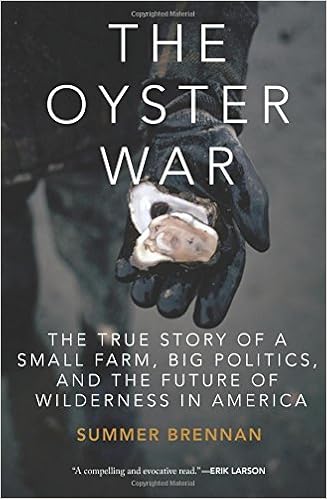
The Oyster War: The True Story of a Small Farm, Big Politics, and the Future of Wilderness in America by Summer Brennan tells the story of farming oysters (introduced from other parts of the world) in California and in doing so breaks open some of the important questions surrounding how we think about wild places.

Disclosure: I am still waiting to read the book.  I followed the story from a distance as it unfolded.  From what I have learned since, I never fully appreciated the passion involved closer to the action.

I highly recommend the podcast of an interview with the author found here or a review of the book here.

Romantic ideas about native and non-natives may have a place in small 
prairies and preserves, but Mediterranean grasses came to California with the first Spanish cattle, violets and bluebells grow alongside native flowers.  

Romantic ideas about returning areas to their pre-contact wildness are also questioned.  Native Americans managed the area in their own way, burning brush and managing prairie to support the local elk population.

Dairymen and cattle farmers were protected when the Point Reyes Wilderness Act became law, the lone oyster farm was not.  Life is sometimes like that.
However we define our ecological goals, they are bound to contain much that is arbitrary and artificial.  We are living in the Anthropocene and human beings are arbitrary.  As a product of evolution ourselves, though, I guess what we do is not technically "artificial" at least no more artificial than the transformation any other invasive species places on its environment.

Meh... I digress.

To the point, ecology is not something static across 
millennium but is always and has always been in flux.  If it has reached a new equilibrium, that should have some value.  If we want to alter the equilibrium or bend it in a new way, that can have value as well.

Let us be honest about this, we are making human decisions based upon human values and s
ometimes all we
are doing is pitting the value 
kayakers place upon an undisturbed ascetic against the value a farmer place upon local place or localvores place on low food-mile oysters.  The science suggests oysters did no harm to the ecology of the place but the idea of farmers in the wilderness ran counter to some perceptions of wilderness.

My reading of the story is that there was enough fault to go around.  Everybody was right.  Everybody was wrong. If you have too strong of an opinion on the matter, it is operating as a 
Rorschach test and telling me more about your internal life than the truth of the matter.


Eventually, however, a society just needs to make a decision.


As someone who is a little bit more concerned with eating than the appearance of an untamed-ness, my sympathies lie with the oyster farmers.  Legally, it appears as if the park service was well within its rights to end the lease of the oyster farmers, despite the fact that science could show no harm was being done.  

Thursday, August 13, 2015

Its Not about the Science

While the study has been scrutinized for ethical concerns regarding its execution, the finding that Golden Rice elevates vitamin A deficiency in children has not been questioned.
A controversial study that showed genetically engineered golden rice could alleviate vitamin A deficiency in children was retracted by the American Journal of Clinical Nutrition on 29 July, nearly 2 years after investigations found problems with how the study had been conducted. Supporters of golden rice are dismayed by the outcome, first reported by Retraction Watch, but they point out that the data and conclusions remain robust.
The study was retracted not because the data or the conclusions have been found faulty, but because of discrepancies surrounding consent forms and the possibility that children were studied without proper ethical safeguards in place.

That's bad.  That should not happen.  Those responsible for the lapse should face appropriate consequences. But the science is valid and children could be helped by the addition of golden rice to their diet.

But the battle is not about science, it is about politics and politics is about perception.

We are surrounded by genetically modified organisms.  Unless you eat a truly paleo diet of game and forage, you eat GMO.  Heck, if you eat whitetail deer, you are still eating something which eats a whole lot of GMO's.


Label them and let those with too much money pay more for the privilege of feeling morally superior to those who do not or can not.  But an ideology that would let kids go blind for the sake of its own ideological purity, I think that is something worth resisting.


Wednesday, August 12, 2015

Some Friends actually are Food

Anthropology and psychology, like the other social sciences, can not help but be constrained by the culture and experiences of the observers.

By studying others we hope to learn about what it means to be human.  As often than not, however, what we end up doing is revealing our own provincialism.  In this recent article reviewing a study of cat consumption in certain of Madagascar, the provisionalism of this modern American life shines forth.


The researchers had hypothesized that because cat meat was not a preferred food, its consumption would be restricted to economic hard times. They were wrong. There was no evidence that people turned to eating cat only as a last resort when other forms of meat were unavailable. Rather, killing and eating cats seemed to be motivated more by sheer opportunity than necessity or a pronounced culinary preference. 
The researchers also wanted test the notion that food taboos are culturally transmitted. Thus they predicted that the towns would differ in the strength of prohibitions against eating feline flesh. This was technically true: for example, 10% of the residents in one town had a personal taboo against eating cat compared to none of the inhabitants of another town. On the whole, however, only 3% of all the individuals interviewed in the study were disgusted by the idea of eating cat meat. As the consumption of dog meat is widely tabooed on the island of Madagascar, the lack of prohibitions against eating cats is surprising.

It was once the case that the nation's cities were populated by the excess population of the countryside.  Farm mechanization created the extra labor which helped build our cities and populated the Chair's of academic departments from Veterinary Science to Shakespeare.  

Increasingly, however, those positions are filled by women and men whose closest connection to
2015: Some friends are food.

agricultural production is ever more likely to have been a grandparent or great-grandparent to whom they can not relate.  Consequently, they are spending research dollars on questions any farm kid of reasonable insight could answer.

What farm kids understand is that human relationships to the animals surround us do not fit into an easy trichotomy of the majestic wild, anonymous meat wrapped in cellophane, and pampered fur baby of a cat or dog but rather exist upon a spectrum from pest to companion. We care for our livestock and can be saddened at sending a favorite animal to market. 

Members of a single species of wild animal can be pest, food, a majestic animal to watch from the porch, depending upon the context.   Pets can be working members of the farm and contributers to the hunt who experience the real risk of harm in the process.  

They are not babies, they are members of a tribe or family, and membership comes with responsibilities as well as rights.

When I was seven it was time to butcher the goat that I had treated as a pet.  My mother was worried
1978: "Is it ready for the freezer yet?"


that I might be traumatized so a slightly older cousin was tasked to keep me away from the carcass until it looked a little less like my pet.  The cousin but my mother realized her concern was unfounded when i asked, "So, does it go in the freezer like this?"   At a young age I understood why we had cared for the goat. I understood sacrifice for the good of the pack. I understood that we had claims on the goat as well as an obligation to care for it. Over at the Huffington Post, these are foreign concepts.
To me, the biggest surprise of the research was related to how Madagascarans obtained their cat meat. Half of the time they simply ate the family pet. Cat meat was also commonly acquired in the form of gifts from friends. And sometimes cats were caught by hand or by trapping. In one of the towns, most of the cats were - gulp -- road kill. Hardly anyone had ever bought cat meat at a market.
They didn't buy their meat at the local Whole Foods! The inhumanity!


In hunting or farming, the writers over at Downton Abbey put the idea succinctly into the mouth of Lady Edith, “there is room for sentiment" in our relationship with animals "but not for sentimentality.”

If they had experience life with livestock, these anthropologists would be able to easily understand a culture where farm animals can be both objects of affection AND sources of protein. The culture of the Madagascar villagers is not the anomaly, but rather a culture where animals are either treated as unfeeling machines of production or surrogate children based merely upon their cultural-specific purpose.   When you live with living things, you learn to treat them all as living things. Where protein can not be taken for granted it is not left to rot along the side of the road.

I ate some roadkill last week. Is it more respectful to leave an animal to rot along side the road or consume it?

Color me cynical but I believe if we took away Frontline and the rabies vaccine and our own culture would very quickly shed the "fur baby" facade for a more practical approach to our cats and dogs. If I were worried about my children's nutrition, I'd be more than happy to expand the species of which I am willing to process roadkill into meat. I mean crock pot cat can't be much worse than baked opossum.

Wednesday, August 5, 2015

Foundation: A Desire to Eat Humanely


The author and a milk goat.
I was born in the midst of the stagflation of the 1970's.  My parents were young, under-employed, and just starting their life together. 

Mom was influenced by the back to the land movement and dad, raised in the post-war hunting culture of the Midwest, was able to take advantage of increased opportunities afforded by the rebounding whitetail deer population.

Consequently, my earliest experiences of food are intimately bound up with its provision.  My life started with lessons which fit the basic formula, "We owe respect and care for the animals which feed us."  More fervently than any other time in my life, I still believe this to be true.

In the decades that followed by parents prospered, our culinary opportunities expanded, and I gave the matter of food little thought.  In my early 30's, however, circumstances began to change.  The Omnivore's Dilemma and other works focused public attention on our food system.  My wife and I purchased our first home, housed on ten acres and I began to see opportunity in those acres.  Our first child was born and I began to reflect upon what lessons I wanted his home life to impart. 

I began to raise a few animals of my own and returned to the field as a hunter.  The more involved I became in the procurement of my own meat the more difficult it became to ignore the philosophical question, "Why spend money supporting farming practices which treat animals in a way fundamentally opposed to my own values?"


A cousin, feral food, and the author.
Cattle, chickens, pigs, they exist for our benefit and every aspect of their environment, and no small part of their genetics, is a consequences of human engineering.  We are as gods to them.  What remains to be asked is, "What kind of gods should we be?"

I evolved a desire to eat more humanely and began to implement practices which would lead me to fulfill that desire.  I measure my progress to that goal through two components: the economic impacts of my eating in the present and the character growth and addition of new skills which are the freedom which will fuel future choices.


Economically I aim to continually decrease my contribution to those aspects of the food system who in improving their profit margins by tactics which place undue stress on animals or otherwise restrain the animal from living according to its nature.  I accomplish this through informed commercial transactions with the industrial food system, raising or buying meat from local sources, and hunting.

This is the keystone to my approach: sheep need to be allowed to be sheep.  Cattle should be allowed to live as cattle.  Whitetail deer, bear, grouse, largemouth bass, lions, wolves, should be allowed an existence that comports with their basic natures and then dispatched as humanely as possible.  Some will become food for the masses, others will serve niche markets, and still others will be culled in trophy hunts or for population control.
  
Character growth is freedom.  I do not want to be a person so bound to his desires that I regularly fail to uphold the economic goal above.  From time to time I really want to bite into a Slim Jim or grab a Hardee's sandwich on the run.  I do not need them, I want them.  Strength of character is the freedom to resist desire.  In other words, I believe the ability to act according to one's convictions on any issue is a learned skill.  The learning requires the doing and I do that I might learn.


While I strongly believe in my values of animal husbandry, they are not the only values I possess and I am not yet willing to make them the values that rule all the others.

Three examples:

1.  I do not insist that my wife, children, or anyone else change their diets on the basis of my judgment.  Forbidding my children a ballpark hot dog or taking issue with my wife if she brings home a rotisserie chicken after a hard day will not, in the long run, further my goals. 

I am able to provide a year's worth of humanely raised meat so the family's annual consumption of industrial meat is far below the national average and decreasing.  If I were to attempt to force complete compliance, I doubt my family would be interested in carrying the experiment forward in their own time.


2.  Assuming I find it otherwise fit for consumption, I will eat any food that is about to be thrown in the garbage.  Food that is bound for the landfill has lost its economic impact and it is more honoring to the animal which was the source of that product to consume it than have it made into landfill.  This is about more than a co-worker's leftover pizza. 

My local meat cutters often have to pay for the disposal of excess fat trimmings.  I, however, can use those trimmings to make my own ground meat into sausage or render it into cooking lard, both are cost-free ways of expanding my culinary opportunities at minimal cost. 


3.  I find myself in agreement with Jesus about the importance of receiving the hospitality of others.  When he sent out the 70, he gave the command, "When you enter a town and are welcomed, eat what is offered to you" (Luke 10:8).  If a first-century Jew could put relationships over dietary rules, we should take seriously the question if we should too.

If someone cares enough for me to invite me into their home or to bring a bucket of Kentucky Fried Chicken to work, I am less interested in forcing them to constrict their hospitality to my values than I am in accepting their kindness.  The money has already been spent; my eating has minimal economic impact on the food system makes contact with another of my values: receiving hospitality with an accommodating spirit. 


Some of the author's Icelandic Sheep.
There have been improvements made in the direction of animal welfare over the last decade.  Cattle feed lots, or at least many of them are better than they once were.  Hog operations appear less distressing to hogs than they do to our human sense of comfort. 

Sometimes what is called progress, however is questionable.  Take for example the declining use of forced molting, a process which allows laying hens to produce eggs for a second year.  Without it layers become economically unviable after one year, cutting their life expectancy in half.  


Improvements have been made but more progress remains.  I still would not be able to bring myself to treat animals as they are treated in the industrial system.  If I would refuse to do a thing myself, what kind of man am I if I knowingly pay others to do for me that I might feign blamelessness? 
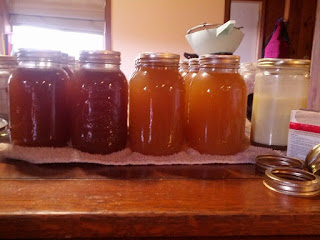
Two batches Mutton stock and a half jar of lard 
My alternatives have not been expensive, but they do require planning.  Some skills had lain dormant for decades and other skills were learned.  Equipment was acquired.  My character has grown so that I can joyfully eat as a vegetarian, or skip a meal or two when alternatives are lacking. 

Much of what I have done is within the reach of the vast majority of Americans, even those without access to agricultural land.  If have room for a $200 freezer and within driving distance of an agricultural area, you can take responsibility for knowing that your meat was raised humanely through simple visits to the farm on your way to pick up a side of beef at a locker plant.  I'm not talking about the farms who cater to organic, humane, gmo free crowd.  You can find a dairy whose practices approve, they will have beef available.  You can find a kid raising hogs for 4-H, he'll sell you a pig that won't make the fair.  If you pay for the processing, I am liable to give you my older laying hens.  My neighbor might do the same.  
The problem is not entirely with the industrial food system but how, as a population, we have allowed ourselves to become dependent upon it.
 

I don't think the biggest driver for change will be legislation or even producer guidelines but for eaters to be a little less lazy about the acquisition of their food. 


I do not claim perfection.  I don't even know what perfection might look like.  I can conceive, however, of positive changes.  I desire that my short existence on this globe be defined by my own perception of what it means to live in right relationship with the living things which surround us.  Anthropocene.